
The Five Elements in Balance
How the elements interact, support, and regulate one another
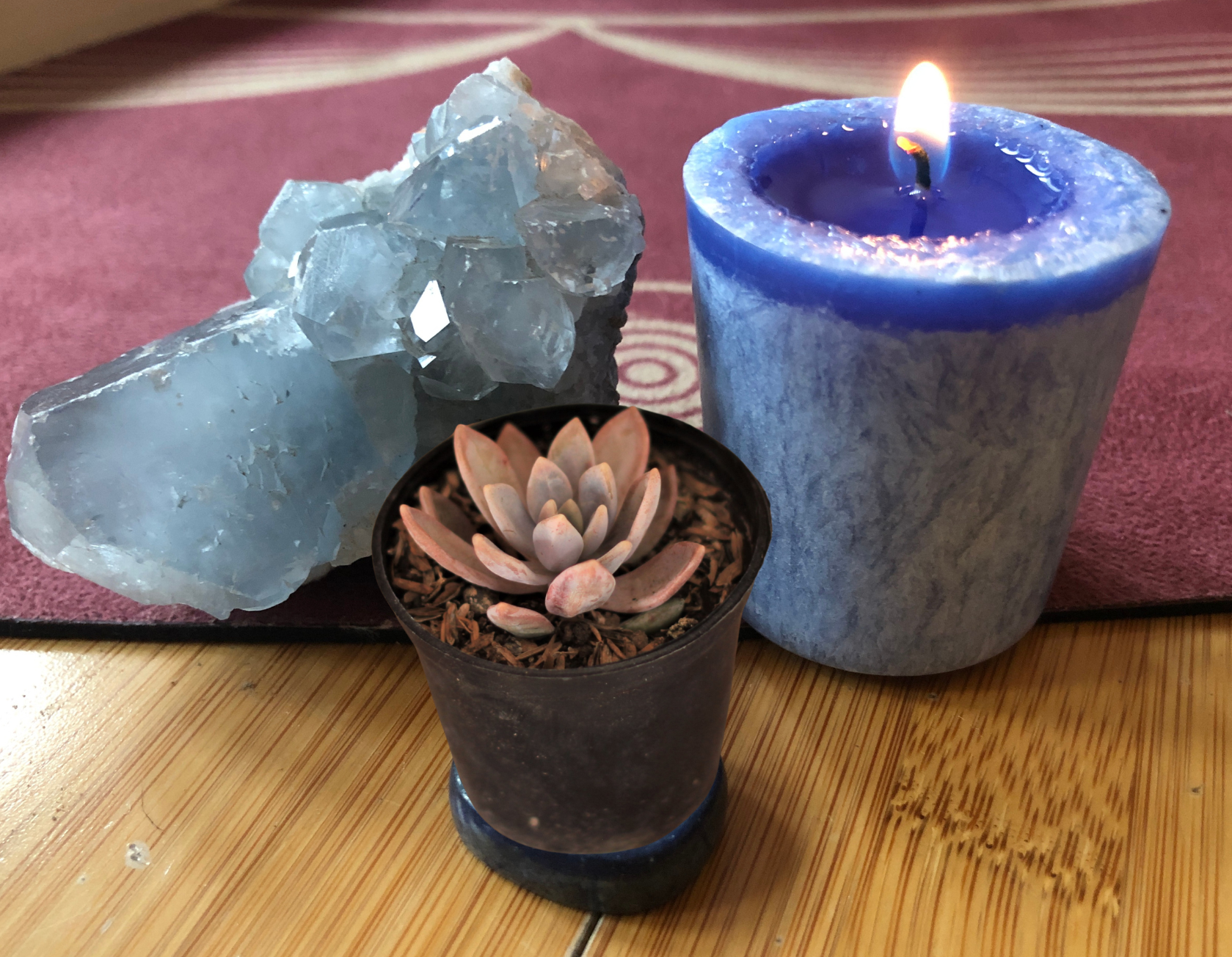
The Five Elements are easiest to understand as a dynamic system.
Wood, Fire, Earth, Metal, and Water each have their own qualities, yet none exists in isolation. They continually interact, nourishing, regulating, and influencing one another.
When these relationships are balanced, qi can move through a space with greater ease, creating a sense of harmony and coherence. Understanding the relationships between the elements is another way to see a space through a feng shui lens.
The Nourishing Cycle
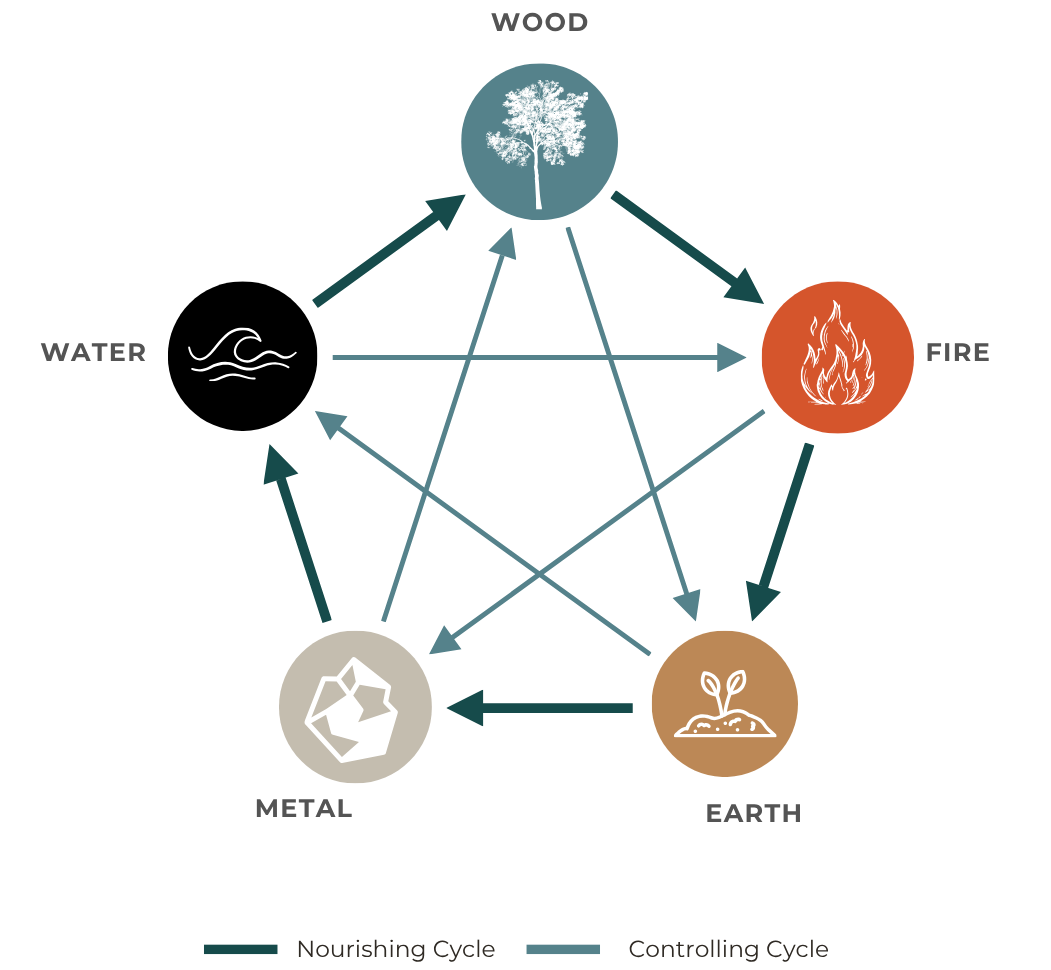
The first relationship is the nourishing, or generating, cycle. Each element has a nourishing relationship with another:
Water nourishes Wood and supports its growth.
Wood feeds Fire by providing fuel.
Fire creates Earth through ash and transformation.
Earth gives rise to Metal through the minerals within it.
Metal generates Water through condensation, as water gathers on cool metal.
Together, these relationships form a continuous cycle of nourishment and renewal.
The cycle describes how one elemental quality can support and strengthen another. When we want to cultivate a particular quality, we can work with the element that nourishes it.
The Controlling Cycle
The second relationship is the controlling cycle. Each element also has a regulating relationship with another:
Wood controls Earth through roots that hold and shape the soil.
Earth controls Water by containing and redirecting it.
Water controls Fire by cooling or extinguishing it.
Fire controls Metal by melting and transforming it.
Metal controls Wood by cutting and shaping it.
The controlling cycle provides structure and regulation. Control is a natural part of balance. When one element becomes particularly strong, its controlling element can help bring its influence back into proportion.
The Reductive Cycle
The reductive cycle offers a gentler way to work with an element that has become somewhat overactive.
It follows the nourishing cycle from the opposite direction. The element being nourished draws energy from another, gradually reducing it.
Fire draws from Wood as fuel.
Earth draws from Fire as it transforms into ash.
Metal draws from Earth as minerals form.
Water draws from Metal through condensation.
Wood draws from Water for growth.
In each case, the element doing the drawing is strengthened while the element it draws from is reduced. This gives us a gentler way to soften excess without directly controlling it.
How the Cycles Work Together
The three cycles give us different ways of working with elemental energy:
Nourishing supports and strengthens.
Controlling cuts off or regulates excess more directly.
Reducing gently draws energy away from excess.
These relationships become especially useful when one element is particularly strong in a space.
A room filled with metal furnishings, hard surfaces, white and gray tones, and highly structured forms may have a strong Metal quality. A room dominated by plants, wood, vertical forms, and blues may strongly express Wood.
A dominant element isn't necessarily a problem. Its effect depends on how it interacts with the other elements and whether the overall pattern supports the people and activities within the space.
When an element becomes excessive, the cycles give us different ways to work with it:
Strong Wood: Metal regulates; Fire reduces.
Strong Fire: Water regulates; Earth reduces.
Strong Earth: Wood regulates; Metal reduces.
Strong Metal: Fire regulates; Water reduces.
Strong Water: Earth regulates; Wood reduces.
The goal is to bring the elements into a more supportive relationship with one another, allowing the energy of the space to move with greater ease.
Yin & Yang Within the Elements
Each element can also express through both yin and yang qualities.
Yang tends to be more active, visible, expansive, and outward. Yin is quieter, more contained, receptive, and inward.
A space might express yang Fire through bright light, vivid color, movement, and social activity, while yin Fire might appear through candlelight, warmth, intimacy, and soft illumination.
Both are expressions of Fire.
The same principle applies across all five elements. A space may need more activity or more stillness, openness or containment, depending on what the people and the space require.
Creating Balance
Every space has its own elemental character. A bedroom may call for more Yin and restoration, while a creative studio may benefit from more Wood and Fire. A workspace may need stronger Metal and Earth.
The cycles help us respond to what a space needs — nourishing what needs support, regulating what has become excessive, and allowing qi to move naturally between the elements.
When the elements and yin and yang are working together, a space feels balanced, harmonious, and at ease.
The Five Elements give us a way to understand that balance and shape our environments with greater intention.
